偏离
项目《偏离》诞生于对空间经验的回访。从上海金山的一座小公园出发,我通过重访记忆中的地点,收集相关的历史资料,对个人经验的生成以及工业小城的历史进行了考察。随后,在上海外滩美术馆的《经验|建筑》工作坊中,我邀请参与者们以写作为方法,重新回望一段私人的空间经验,观察他们如何面对记忆中的地点,理解自身与空间的关系。在这一反馈过程中,不同的作者带来了迥异的个人体验,积极地回应着个体与外部空间的互为作用。
正向艺术研究会(正艺会)的“今天‘山水’有用吗?”「泛山水」线下项目,为我提供了延续这些回应的机会。参与本次项目让我可以重新看待工作坊中的多样写作:个人经历的曲折、回忆与当下感受之间的错位、写作方法的差异,甚至对写作要求本身的偏离,使每一份文字都被投影在了独特的观看位置。这些彼此偏离的视角,让我联想到中国山水画中随着视点移动而展开的观看。作者们从自身经历出发,选择不同的细节与路径,使空间在各自的描述中呈现出不同的面貌。阅读这些文字时,我也随着他们的讲述不断转换位置,进入作者各自的经验世界。

Photographed at Hangzhou Botanical Garden · 2026
这种观看位置的转换,又将我的注意力引向山水诗画背后那些偏离原有生活路径的个人遭遇——流亡、放逐、归隐。山水经验中同样包含着个人与空间相互塑造的关系:人带着自身处境接近景物,也在游历、停留与描绘中受到景物的影响。这同样呼应着我在工作坊中的收获,参与者辨认空间留在身体、感受与习惯中的痕迹,也通过回忆与写作,让记忆中的空间获得新的形状。山水诗文的创作者们寄情于山,遁形于水,在自身处境与自然景物之间往返,那个偏离原有位置的自我,也在这一过程中逐渐显露。

Photographed at Hangzhou Botanical Garden · 2026
带着这些粗浅的思考,我将工作坊中的六份文字带入杭州的竹林,让作者的朗读伴随观众展开一次林中漫步。听者沿着林中小路行走,也随着他人讲述进入不同的记忆空间。耳中的房间、道路与庭院,与眼前的竹林互为关照。别人的过去与自己的当下,在脚步、声音和注意力的移动中暂时相遇。
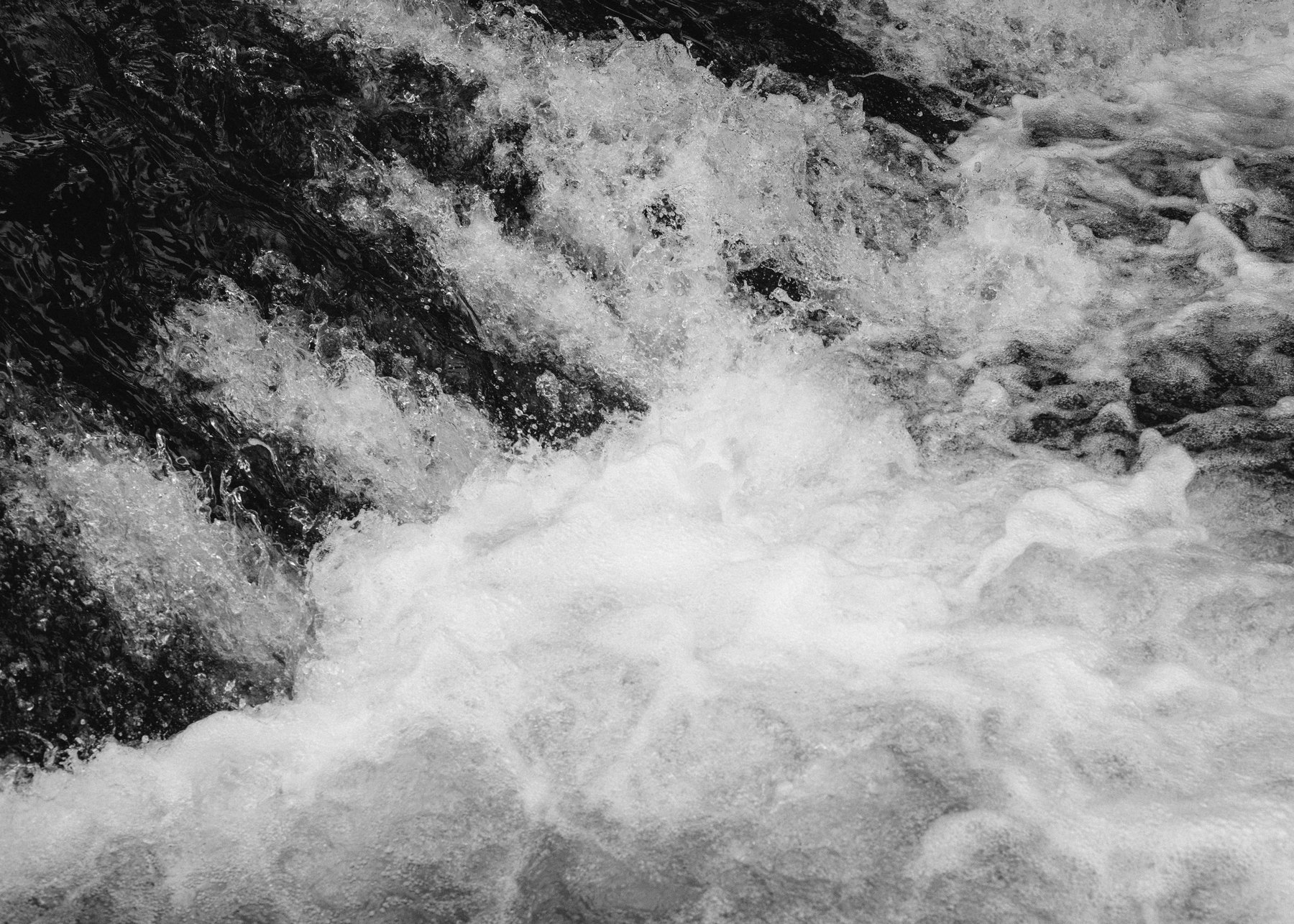
Photographed at Hangzhou Botanical Garden · 2026
项目“偏离”由此成为一次借道的尝试:借助他人的空间记忆,偏离惯常的观看与自我理解,为那些尚未被察觉的关系留出可能。
Short Cuts
The project Short Cuts grew out of a return to my own experience of space. It began with a small park in Jinshan, Shanghai. By revisiting places held in memory and gathering related historical materials, I explored how personal experience takes shape, as well as the history of this industrial town. Later, in the Experience | Architecture workshop at Rockbund Art Museum in Shanghai, I invited participants to use writing to revisit a personal experience of space. I observed how they approached places in their memories and made sense of their relationship with space. In response, each writer brought forward a distinct personal experience, actively engaging with the ways in which individuals and the spaces around them shape one another.
The Positive Art Research Center’s (PARC) project Is “Shan Shui” Useful Today? — “Beyond Shan Shui (On-site)” offered me an opportunity to continue these responses. Taking part allowed me to look again at the varied writing produced in the workshop: the twists and turns of personal histories; the disjunctions between remembered experience and present feeling; the differences in writing methods; and even the ways some writers departed from the original prompt. Each piece seemed to open onto a distinct vantage point. These diverging perspectives brought to mind the shifting views of Chinese landscape painting, where the scene unfolds as the viewer’s viewpoint moves. Drawing on their own experiences, the writers chose different details and paths, allowing space to take on a different appearance in each account. As I read, I too moved from one position to another, entering the distinct worlds of experience each writer described.
This shifting of vantage points drew my attention to the personal circumstances behind landscape poetry and painting—lives diverted from their former paths through exile, banishment, or reclusion. The experience of landscape, too, involves a mutual shaping of person and place: we approach what we see from within our own circumstances, and are also changed by it as we travel, pause, and describe. This echoes what I learned in the workshop. Participants recognized the traces space had left in their bodies, feelings, and habits; through memory and writing, they also gave new shape to spaces remembered. The makers of landscape poems and paintings entrusted their feelings to mountains and sought refuge in waters, moving back and forth between their own circumstances and the natural world. In this process, a self displaced from its former position gradually came into view.
With these tentative thoughts, I brought six texts from the workshop to a bamboo grove in Hangzhou, where the authors’ readings accompanied visitors on a walk through the trees. As listeners followed the paths, they also entered different spaces of memory through other people’s stories. The rooms, roads, and courtyards heard in their headphones came into relation with the bamboo grove before their eyes. Another person’s past and one’s own present briefly met through the movement of footsteps, sound, and attention.
Short Cuts thus became an attempt to take a detour: to move away from habitual ways of seeing and understanding oneself by way of other people’s spatial memories, making room for relationships that have yet to be noticed.
请观众自备耳机(蓝牙或有线均可)。
We recommend bringing your own headphones (Bluetooth or wired).
文本创作与朗读:吉晓瑜、董墨、橘、醒山、汪晓芙、刘文博(按朗读顺序)
本项目中的六篇文本源自我在上海外滩美术馆夏季展览《幽斯帕利斯 Youth Palace》期间开展的《经验|建筑》工作坊。特别感谢上海外滩美术馆对工作坊的支持,以及六位参与者的写作、朗读与分享。
Texts written and read by: Ji Xiaoyu, Dong Mo, Ju, Xingshan, Wang Xiaofu, and Liu Wenbo (in order of reading)
The six texts in this project grew out of the Experience | Architecture workshop I led during Youth Palace, the summer exhibition at Rockbund Art Museum in Shanghai. My special thanks to Rockbund Art Museum for supporting the workshop, and to the six participants for their writing, readings, and generous sharing.
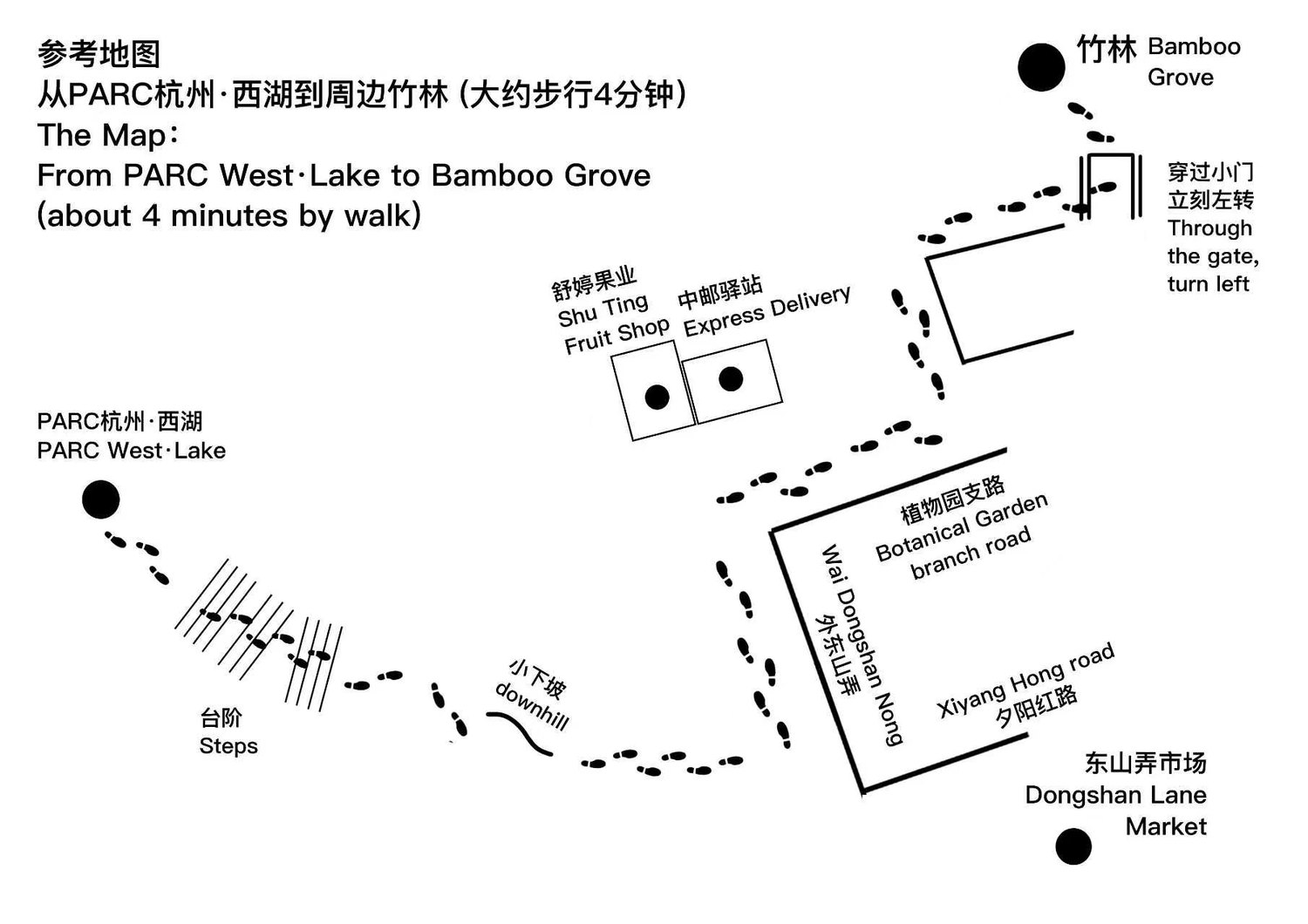
观展路线 / Suggested route
展览由两部分组成:PARC杭州·西湖空间的室内展陈,以及在周边竹林中边漫步、边聆听户外声音作品。
The exhibition comprises two parts: an indoor display at PARC Hangzhou · West Lake Space, and an outdoor audio walk through the bamboo groves nearby.
观展路线推荐:从 PARC 杭州·西湖空间步行至周边竹林(约 4 分钟)。
Suggested route: PARC West Lake to the Bamboo Grove (about a 4-minute walk).
观展提示:户外声音作品需通过网络和手机播放,建议观众自备耳机(蓝牙或有线均可)。
The outdoor audio works are streamed online via mobile phone. We recommend bringing your own headphones (Bluetooth or wired).